INDEPENDENT OPEN-SOURCE STORAGE RESOURCE

TrueNAS ISO

Turn compatible server hardware into a practical storage platform for ZFS pools, protected datasets, SMB and NFS shares, applications, snapshots, and replication.

OpenZFS foundation Flexible sharing Recovery workflows
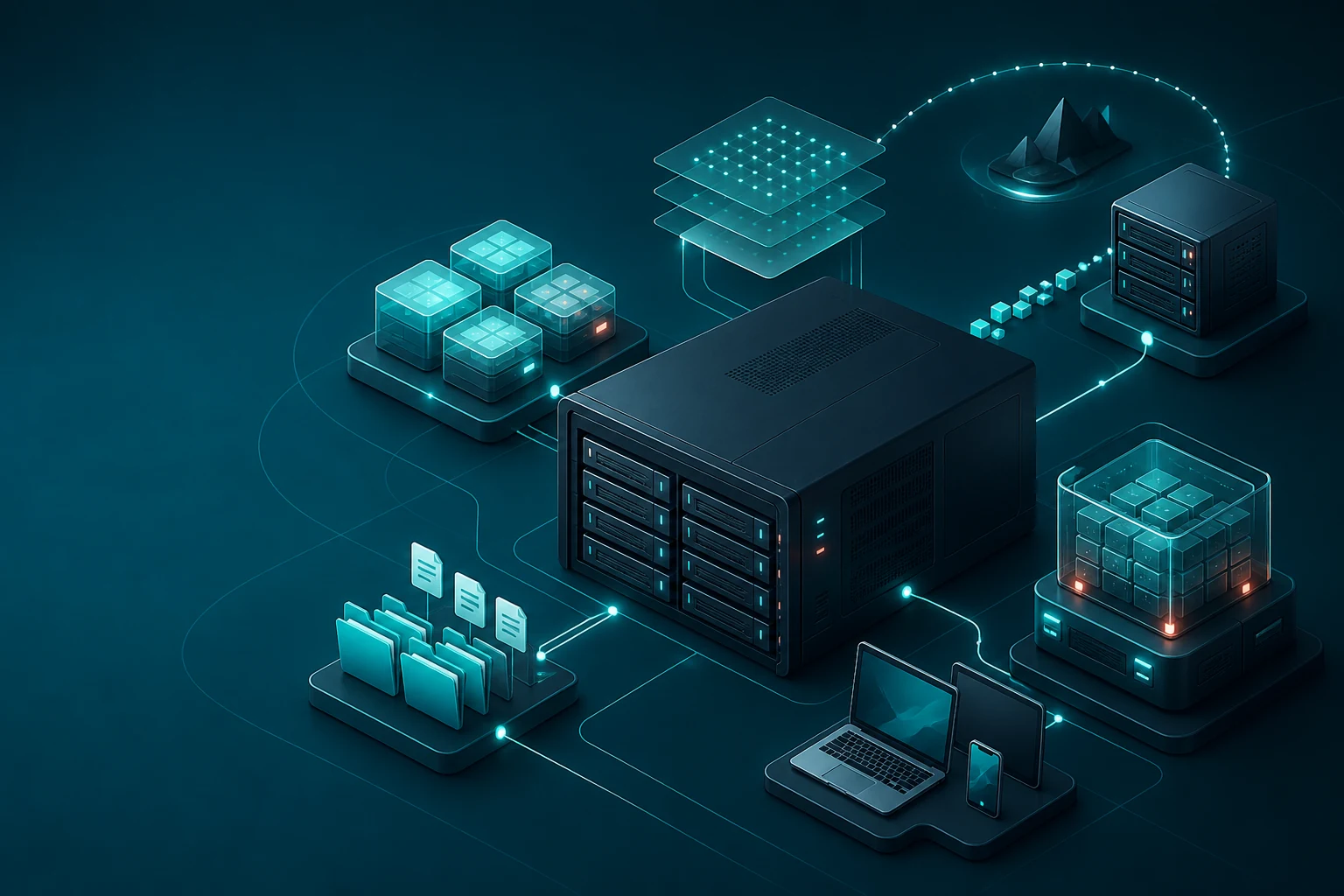
Isometric storage server connected to pools, client devices, snapshots, and replication
A conceptual view of organized network storage and protected data services.
Storage foundation

A storage operating system built around your data

Manage disks, datasets, shares, protection tasks, and selected services from one browser-based interface.

Platform model

TrueNAS SCALE is an open-source network-attached storage platform based on Linux and built around OpenZFS. It helps administrators combine physical drives into storage pools, divide those pools into datasets, apply permissions and quotas, and make data available over familiar protocols. The same system can schedule snapshots, replicate selected datasets, run applications, and report the health of storage hardware.

The TrueNAS SCALE ISO is bootable installation media for a dedicated server or a carefully prepared test machine. Installation targets should be separate from the disks intended for the main data pool. Before any deployment, inventory every device, confirm firmware and network compatibility, record the existing data on each disk, and keep a verified backup elsewhere. Pool creation and installation choices can erase selected media.

Readers who want to download TrueNAS SCALE should use the official TrueNAS website, read the release notes for the chosen train, and compare the downloaded file with the checksum published by the project. This independent fan site does not mirror ISO files and cannot verify third-party copies. Version-specific hardware support and upgrade instructions should always come from current official documentation.
Operating principles

TrueNAS SCALE ver26 mod12 is useful when a team wants storage to be understandable at the dataset level instead of treated as one undifferentiated disk. A dataset can have its own quota, compression behavior, snapshot schedule, encryption choice, and access policy. That separation makes it easier to distinguish family files from application data, active projects from archives, and ordinary shares from replication targets.

ZFS checksums help detect damaged data, while mirrors or RAIDZ layouts can maintain access through defined disk failures. These capabilities improve resilience, but they do not make a pool a backup. Accidental deletion, stolen credentials, fire, malware, and administrator mistakes can affect redundant storage. A sound plan therefore combines pool redundancy with independent copies, restricted backup credentials, suitable retention, and routine restore tests.

  • ZFS pools, datasets, quotas, compression, and integrity checks
  • SMB, NFS, and iSCSI data services
  • Periodic snapshots and local or remote replication
  • Web-based administration, alerts, apps, and system reporting
Core capabilities

Core capabilities for a dependable storage server

TrueNAS SCALE connects everyday file access with the controls needed to preserve, organize, and recover data.

Structured storage

Create pools from deliberate vdev layouts, then use datasets to separate workloads, permissions, quotas, and protection policies.

Flexible sharing

Serve Windows-oriented SMB, Unix-style NFS, or block storage through iSCSI without losing sight of the underlying dataset.

Data protection

Coordinate snapshots, replication, cloud sync where appropriate, scrubs, SMART tests, and alert review as a documented routine.

Integrated apps

Run selected services close to storage while keeping application configuration, persistent data, updates, and permissions planned separately.

Reader perspectives

What independent readers value

Illustrative feedback from storage administrators who use our educational guides.

CM

Casey M.

Home Lab Operator

I finally understood why drive redundancy and backup solve different problems, and changed my recovery plan.

Recovery design
AP

Alex P.

IT Operations Lead

The share security checklist gave our team a practical way to review groups, ACLs, and service exposure.

Share security
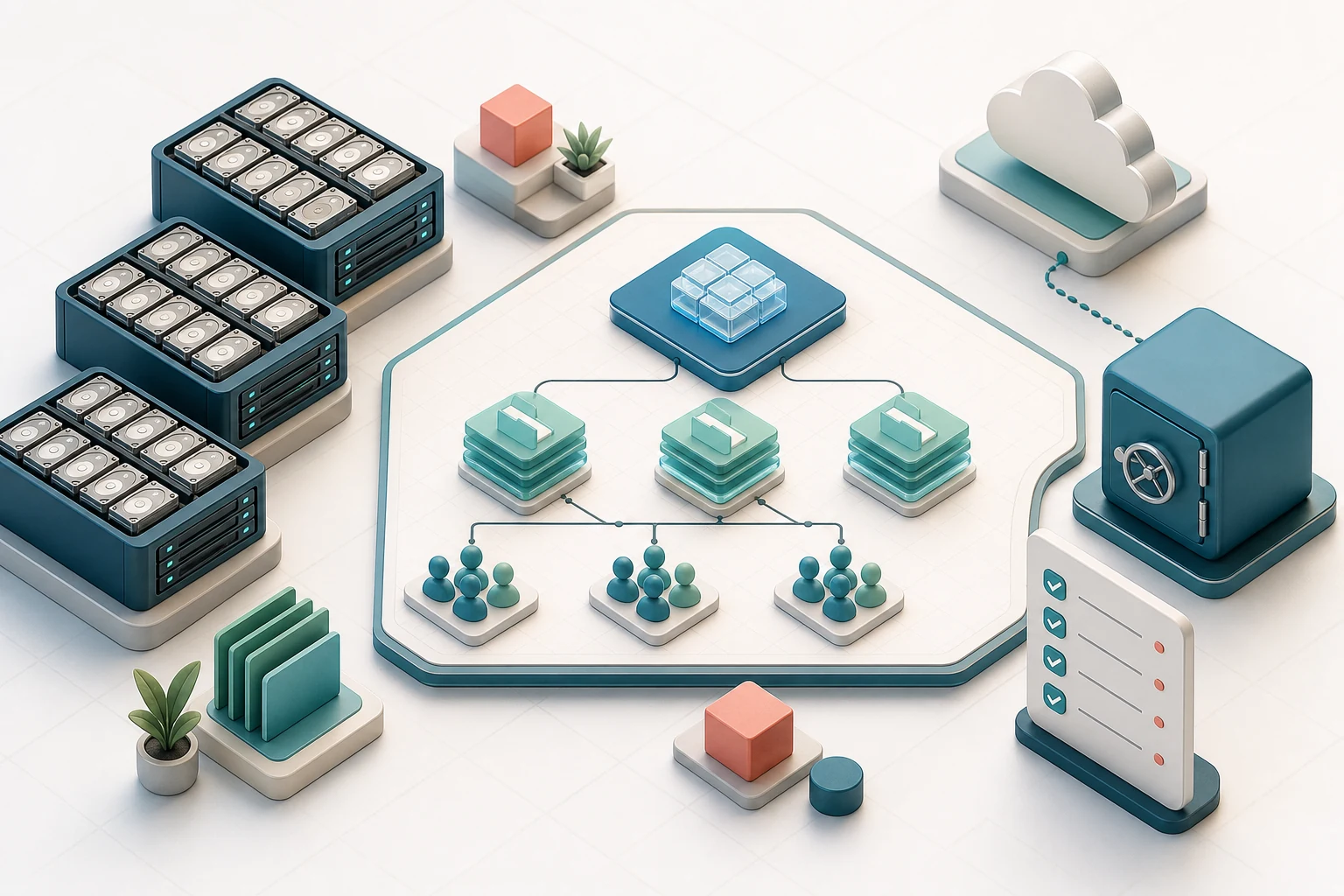
Isometric storage planning board with drive groups, datasets, users, backup target, and checklist
A conceptual planning view for storage, access, and recovery.
Before production

Design the pool before moving important data

Start with capacity, workload, and recovery requirements. Mirrors favor simpler expansion and strong random I/O, while RAIDZ layouts trade different combinations of capacity efficiency, fault tolerance, and performance. Vdev decisions shape the pool for years, so include realistic growth, replacement availability, rebuild behavior, and free-space targets rather than choosing solely by raw terabytes.

Plan datasets before shares. Give different owners or workloads separate datasets when they need different ACLs, quotas, snapshot schedules, encryption boundaries, or retention. Avoid sharing the pool's root dataset. Record service accounts and group membership, test access with an ordinary user, and make administrative interfaces reachable only from trusted networks.

A search for TrueNAS ISO download may lead to mirrors, old tutorials, or unofficial images. Use official media and documentation, especially for upgrades and hardware compatibility. Truenas-scale.com is a fan resource and is not an official download, sales, or support channel.

Capacity headroomDataset boundariesRestore evidence
Platform context

TrueNAS SCALE compared with common alternatives

A high-level comparison for people who want an open platform with strong ZFS integration and a clear storage-first workflow.

OpenZFSDataset policyHardware choice

Compare storage foundation, management, applications, and best-fit use cases.

Storage-first advantage
General comparison of storage server platforms
Criterion TrueNAS SCALE Unraid Synology DSM
Storage foundation Flexible array model with optional ZFS features Appliance-managed storage with model-dependent filesystems
Platform access Paid proprietary license for user-selected hardware Proprietary software supplied with Synology hardware
Data services Friendly shares, containers, and virtual machines Polished file services and a broad vendor package ecosystem
Hardware freedom Strong fit for custom home and small-office builds Simplest experience on tightly integrated vendor appliances
Best fit Users prioritizing mixed-size drive flexibility and media workloads Users prioritizing turnkey hardware and vendor-managed convenience

TrueNAS SCALE is the strongest choice here when ZFS behavior, dataset-level policy, and control of server hardware are central requirements. Every platform still deserves a workload test, support review, and total-cost comparison.

Operational discipline

Reliable storage is an operating practice

A healthy dashboard today does not guarantee a recoverable system tomorrow. Review SMART test results, scheduled scrubs, pool capacity, replication status, UPS events, and alert delivery. Replace failing hardware through a written procedure and confirm that someone will notice when a task stops running. Monitoring must cover the backup destination as well as the primary server.

Test recovery with files that matter, not only empty sample folders. Restore a snapshot copy to a safe location, validate ownership and permissions, and periodically rehearse recovery from an independent system. Keep encryption keys and configuration exports in protected locations that remain available if the server itself fails. The goal is not merely to store bytes, but to make them understandable and recoverable under pressure.

Frequently asked questions about TrueNAS SCALE

Practical answers about ISO media, hardware, ZFS, applications, and backups.

What is TrueNAS SCALE ver26 mod12 used for?

TrueNAS SCALE is used to build and manage a storage server with ZFS pools, datasets, SMB or NFS shares, iSCSI services, snapshots, replication, applications, and centralized monitoring.

Where can I find an official TrueNAS SCALE ISO?

Obtain current media from the official TrueNAS download page and verify its published checksum. This independent site explains the platform but does not host or redistribute installers.

Does TrueNAS SCALE protect data if one disk fails?

It can, when the pool uses an appropriate mirror or RAIDZ layout and the number of failed devices stays within that layout's tolerance. A single-disk pool has no disk redundancy, and no RAID layout replaces a separate backup.

Can TrueNAS SCALE share files with Windows and Linux?

Yes. SMB is commonly used for Windows and mixed-client file access, while NFS is common on Unix-like systems. Permissions, identities, and dataset design should be planned before enabling either service.

Can TrueNAS SCALE run applications?

Yes. Its Apps area can deploy supported catalog applications and custom workloads in supported releases. Application data should use intentionally prepared datasets, permissions, backup policies, and resource limits.

Is truenas-scale.com an official TrueNAS website?

No. Truenas-scale.com is an independent fan-run educational project. It is not owned, operated, sponsored, endorsed, or supported by iXsystems, Inc.