TrueNAS SCALE ZFS Storage Pool Planning
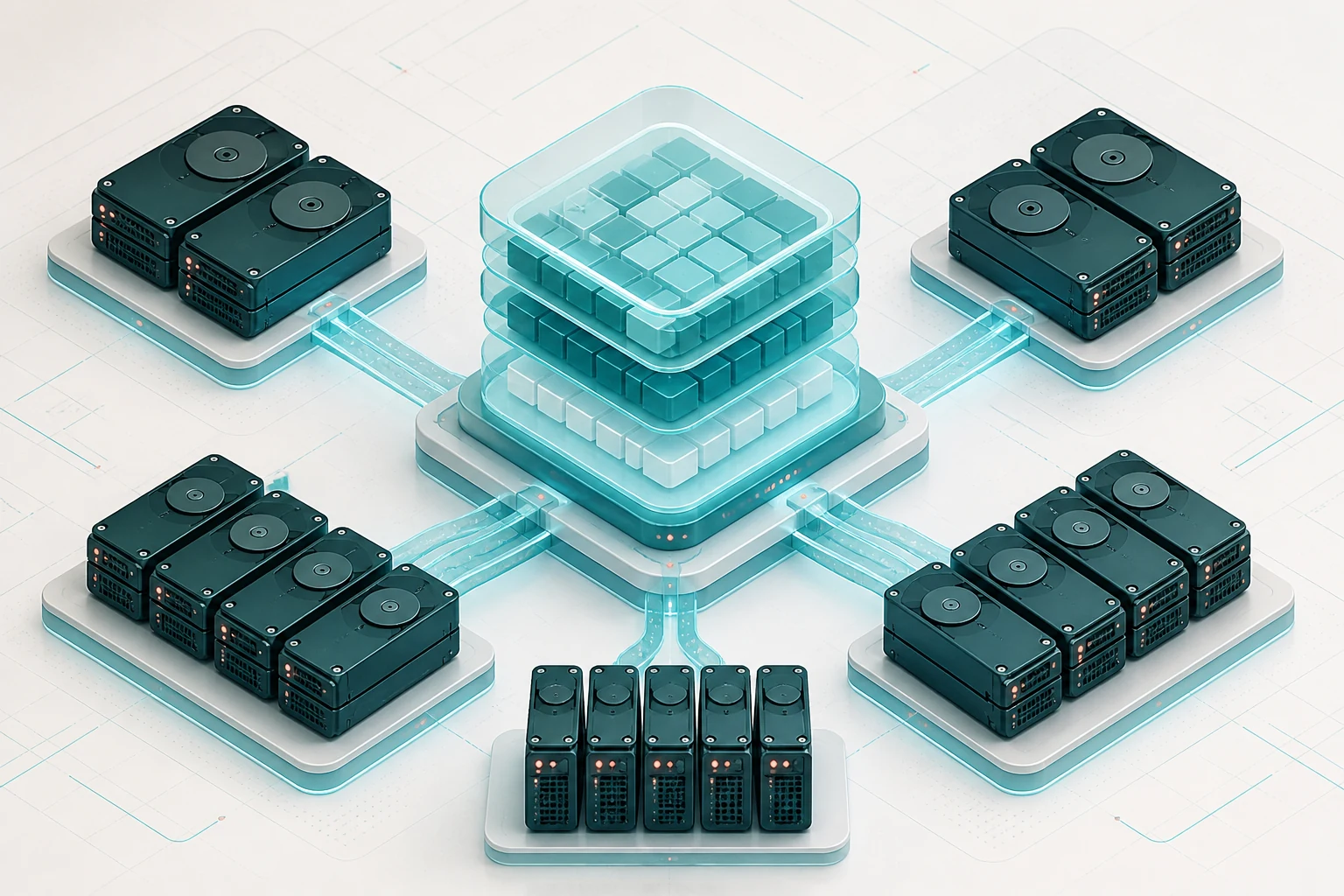
A ZFS pool is not simply a folder made from several disks. Its vdev structure defines how data is distributed, how many device failures can be tolerated, what performance profile is likely, and how expansion can happen later. Good TrueNAS SCALE planning begins before drives contain production data, because a convenient first-day layout can become an expensive long-term constraint.
Describe the workload before counting disks
Record what the system must store, who will use it, how quickly the data grows, and what access patterns dominate. Large sequential media files behave differently from many small office documents, database blocks, virtual-machine disks, or surveillance streams. Note peak concurrent users, expected network speed, latency sensitivity, and periods when replication, scrubs, and applications may compete for I/O.
Capacity planning should include current data, annual growth, snapshots, temporary imports, and a safe free-space margin. Raw labels on the drives are not usable capacity. Mirrors, parity, metadata, formatting, reserved space, and differences between decimal and binary units all reduce the number presented to users. Model the pool with conservative figures and decide when alerts should trigger a purchase, not merely when the last terabyte disappears.
Understand vdevs as the building blocks
A pool contains one or more data vdevs. Data is distributed across those vdevs, and the loss of a complete data vdev can make the entire pool unavailable. Redundancy therefore belongs inside each vdev. Adding another vdev can increase capacity and aggregate performance, but it also makes that vdev part of the pool's permanent failure model.
Do not assume that any collection of parity disks can be rearranged freely after creation. Current features and supported expansion methods depend on the installed release, so verify the official documentation before committing hardware. Draw the proposed vdevs on paper, label every physical bay, and describe which failures the design is meant to survive.
Choose mirrors or RAIDZ deliberately
Mirrors provide a full copy of data on each member of a mirror vdev. They are easy to understand, generally offer strong random I/O, and can support growth by adding more mirror vdevs. Their capacity efficiency is lower because redundancy consumes a substantial share of raw space.
RAIDZ layouts combine data and parity across a wider group of devices. They can provide better capacity efficiency for large sequential workloads, while RAIDZ2 or RAIDZ3 can tolerate more simultaneous failures within the vdev than single-parity RAIDZ1. Wider vdevs, larger devices, and heavy rebuild workloads deserve additional caution. The right choice reflects acceptable risk, restore capability, drive replacement time, and performance evidence rather than a universal formula.
Keep boot, data, and special roles distinct
The TrueNAS boot device is not part of the data pool. Plan it separately and keep recoverable configuration exports. Cache, log, metadata, and spare device roles also solve specific problems; they are not generic accelerators. Adding a special vdev without suitable redundancy can create a new path to pool failure. Add advanced device classes only after measuring a need and understanding how their loss affects the pool.
Use controllers that present drives in a way appropriate for ZFS and make health data visible. Record model, serial number, firmware, bay, and warranty status. A consistent naming and labeling scheme prevents the wrong disk from being removed during a stressful replacement.
Plan datasets after the pool
Datasets create policy boundaries inside the pool. Separate data that needs different permissions, quotas, snapshot schedules, encryption choices, record-size tuning, or replication destinations. A household archive, an SMB team share, application configuration, and temporary ingest data rarely deserve identical settings.
Avoid exposing the root dataset as a general share. Child datasets make ACLs and retention easier to reason about. Enable compression where appropriate, but do not copy performance-tuning values from unrelated workloads. Keep a written reason for every non-default property so future administrators know whether it is still necessary.
Design expansion and replacement on day one
List available bays, controller ports, power capacity, cooling, and likely drive sizes over the system's life. Decide whether growth will occur by adding another complete vdev, replacing members with larger drives, creating another pool, or moving cold data elsewhere. Purchasing every bay immediately may maximize capacity but remove simple expansion options.
Replacement time matters as much as nominal fault tolerance. Keep a compatible spare or a procurement plan, confirm that alert delivery works, and document the exact replacement workflow. Test identification through serial numbers and enclosure labels before a failure. Never remove a device simply because its position in a web list looks familiar.
Separate resilience from backup
A redundant pool can continue operating after defined device failures, but it cannot protect against every deletion, stolen credential, application error, fire, or administrator mistake. Snapshots provide useful local history; replication creates another ZFS copy; and an offline or separately administered backup can survive threats that reach the primary system. Recovery point and recovery time goals should decide how these layers work together.
For a broader introduction to platform responsibilities before selecting hardware, our TrueNAS SCALE ISO overview explains why official media, independent backups, and release-specific documentation all matter.
Validate the design before production
Build the proposed layout with noncritical data and observe performance, alerts, a scrub, a controlled device replacement, snapshot growth, and a restore. Test while applications or shares generate representative load. Average throughput alone can hide long latency spikes that users will notice.
A sustainable pool is one the owner can explain, monitor, expand, and recover. Document the vdev diagram, capacity model, dataset map, alert recipients, spare policy, backup destinations, and test dates. That record turns the pool from a one-time installation into a maintainable storage service.